Arnold Arboretum of Harvard University
About
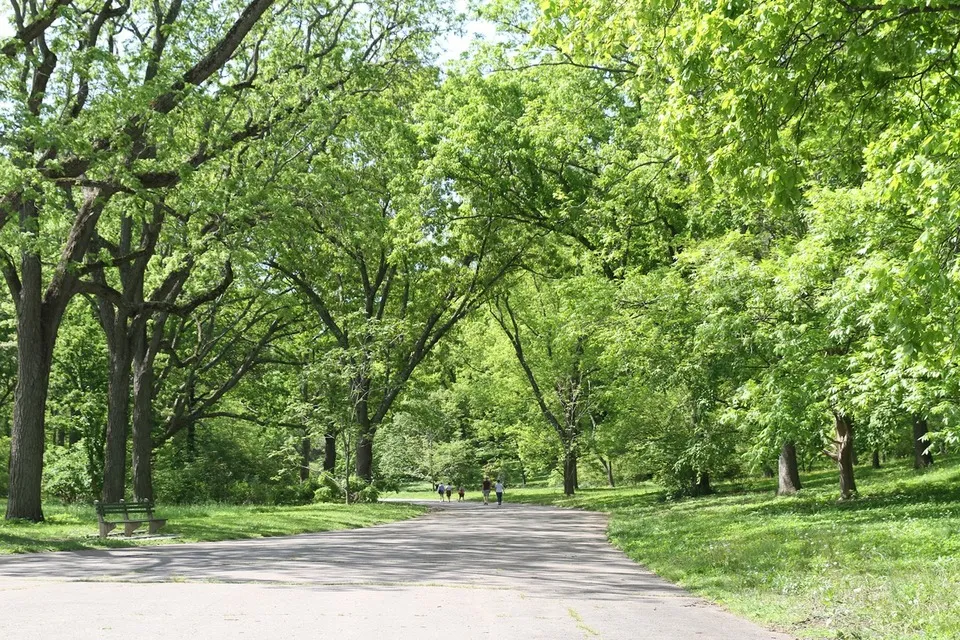
The Arnold Arboretum is a 281-acre landscape in Jamaica Plain holding more than 15,000 accessioned plants, which the arboretum counts among the world's most comprehensive and best documented collections of temperate woody plants, with a focus on eastern North America and eastern Asia. Founded in March 1872, it is the oldest public arboretum in the country. Harvard runs it, but it is a public park of the City of Boston: Harvard gave the land to the city and leased it back for $1 a year on a 1,000-year lease, and Frederick Law Olmsted laid it out as part of the Emerald Necklace park system.
It is free and open every day from sunrise to sunset, which makes it a good choice for walkers, gardeners, photographers and families who want a green half-day without a ticket. The Orange Line ends at Forest Hills, where a station exit marked "Arnold Arboretum" leads along the Arborway to the Forest Hills gate.
Where to start
The Hunnewell Visitor Center at the Arborway Gate, open 10 a.m. to 4 p.m. daily, has maps, restrooms and staff to point you in the right direction. The half-mile Introductory Tour takes about 40 minutes and covers the arboretum's history, mission and research; it can be followed on Expeditions, the arboretum's mobile web app.
Collections worth seeking out
The Bonsai and Penjing Collection began in 1937 with Isabel Anderson's gift of Larz Anderson's Japanese dwarfed trees and now has 67 specimens, centered on five compact hinoki cypress between 150 and 275 years old; it is on view from mid-April to mid-November. Just below the summit of Bussey Hill, the Explorers Garden holds two of the largest Franklin trees in the world, a species now extinct in the wild, and the original North American introduction of paperbark maple from China. The collection records also trace a dawn redwood to wild seed sent from China in 1948.
A landscape with house rules
This is a living collection rather than a picnic park: picnics, fires and barbecues are not allowed, plants must not be picked or climbed, and dogs stay on a leash. Bicycles are welcome on the paved paths at walking-friendly speeds, and the summit of Peters Hill gives a view back to the Boston skyline.
Sources: Arnold Arboretum visitor info, about, our history, directions, visitor tips and guidelines, Bonsai and Penjing Collection, Explorers Garden. Checked September 27, 2026.
Contact Information
Boston, 02130
Photo: Nicole Truong via Google
Arnold Arboretum of Harvard University
About Arnold Arboretum of Harvard University
The Arnold Arboretum is a 281-acre landscape in Jamaica Plain holding more than 15,000 accessioned plants, which the arboretum counts among the world's most comprehensive and best documented collections of temperate woody plants, with a focus on eastern North America and eastern Asia. Founded in March 1872, it is the oldest public arboretum in the country. Harvard runs it, but it is a public park of the City of Boston: Harvard gave the land to the city and leased it back for $1 a year on a 1,000-year lease, and Frederick Law Olmsted laid it out as part of the Emerald Necklace park system.
It is free and open every day from sunrise to sunset, which makes it a good choice for walkers, gardeners, photographers and families who want a green half-day without a ticket. The Orange Line ends at Forest Hills, where a station exit marked "Arnold Arboretum" leads along the Arborway to the Forest Hills gate.
Where to start
The Hunnewell Visitor Center at the Arborway Gate, open 10 a.m. to 4 p.m. daily, has maps, restrooms and staff to point you in the right direction. The half-mile Introductory Tour takes about 40 minutes and covers the arboretum's history, mission and research; it can be followed on Expeditions, the arboretum's mobile web app.
Collections worth seeking out
The Bonsai and Penjing Collection began in 1937 with Isabel Anderson's gift of Larz Anderson's Japanese dwarfed trees and now has 67 specimens, centered on five compact hinoki cypress between 150 and 275 years old; it is on view from mid-April to mid-November. Just below the summit of Bussey Hill, the Explorers Garden holds two of the largest Franklin trees in the world, a species now extinct in the wild, and the original North American introduction of paperbark maple from China. The collection records also trace a dawn redwood to wild seed sent from China in 1948.
A landscape with house rules
This is a living collection rather than a picnic park: picnics, fires and barbecues are not allowed, plants must not be picked or climbed, and dogs stay on a leash. Bicycles are welcome on the paved paths at walking-friendly speeds, and the summit of Peters Hill gives a view back to the Boston skyline.
Sources: Arnold Arboretum visitor info, about, our history, directions, visitor tips and guidelines, Bonsai and Penjing Collection, Explorers Garden. Checked September 27, 2026.